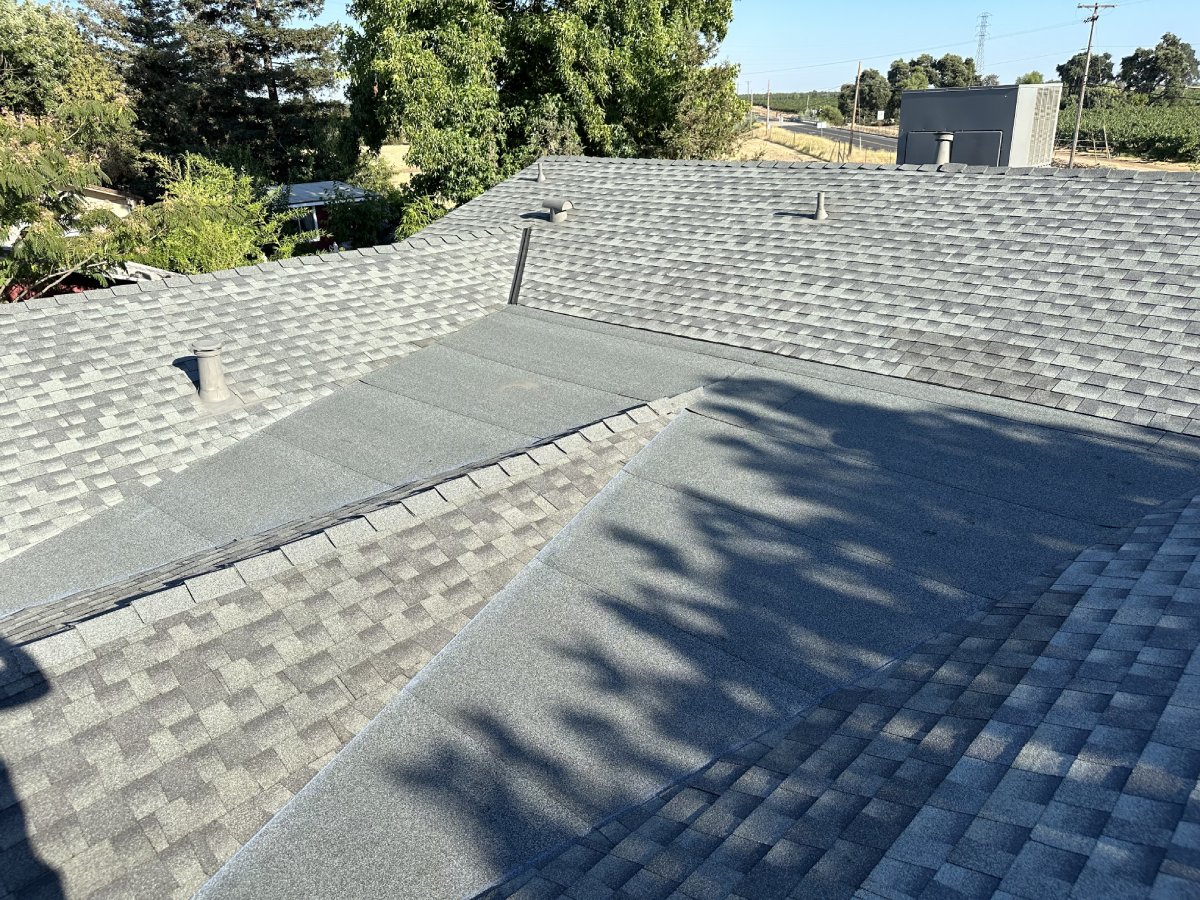
When a storm rolls through Lodi and damages your roof, you have two paths: file the claim yourself and DIY the repair, or hire a licensed roofer to handle both. Most homeowners assume DIY saves money — and on a small loss it can. On anything bigger than a few shingles, DIY almost always leaves money on the table and frequently undermines the claim itself. Here’s how to think about it.
How Homeowner Insurance Roof Claims Actually Work
Standard HO-3 policies cover sudden, accidental damage from named perils: wind, hail, fire, fallen objects (like a tree branch), and weight of snow/ice. They do not cover wear and tear, age-out, or pre-existing damage that the storm just happened to expose.
When you file, the carrier sends an adjuster (or a third-party “field adjuster” they’ve contracted with). The adjuster inspects, documents damage, and writes a scope-of-loss with a dollar value. They issue a payment based on that scope, minus your deductible.
Two payment models exist: ACV (Actual Cash Value) pays depreciated value up front; you get the depreciation back when you submit receipts proving the work was completed. RCV (Replacement Cost Value) pays the full cost up front. Most modern policies are RCV; check yours.
Where DIY Goes Wrong: The Adjuster Visit
The adjuster’s scope is what defines your payment. If they miss damage, undersize the repair, or skip line items (felt underlayment, ice-and-water shield where required, code-upgrade items), the carrier pays based on what’s in the scope, not what’s actually needed.
Adjusters are not roofers. They’ve been trained to recognize damage but they’re working through 15-30 inspections per week and they make mistakes. A homeowner who doesn’t know what to look for accepts whatever scope the adjuster writes.
A licensed roofer at the inspection — at no charge in most cases — catches missed items in real time. We typically find $1,500-6,000 in additional documented damage on a meaningful claim that wasn’t in the initial scope.
Supplemental Claims: The Money Most People Leave Behind
California carriers are required by law to pay for code-compliant restoration. That means if your roof was installed under 2005 code but Lodi now requires upgraded underlayment, ridge vents, or fastener spacing, the upgrade is covered — but only if it’s specifically requested as a supplement.
Common supplements that get missed when homeowners file alone:
- Code-required ice-and-water shield
- Drip edge upgrades
- Decking replacement (if old decking can’t accept new fasteners)
- Permit fees
- Material disposal fees
- Matching/discontinuation premiums
A roofer experienced with insurance claims drafts these supplements and submits them with documentation. Carriers approve roughly 70-90% of properly documented supplements.
Storm Chasers: The Other Risk
After any major Central Valley wind or hail event, out-of-state contractors flood Lodi neighborhoods with door-to-door pitches: “Free roof, just sign here.” This is dangerous for several reasons:
- Many aren’t CSLB-licensed in California (verify at cslb.ca.gov)
- Their “free roof” assumes the carrier will pay everything plus a “deductible waiver” that’s actually illegal in California (insurance fraud)
- They overstate damage to inflate the claim, putting the homeowner at fraud risk
- They disappear after collecting the carrier check, leaving warranty claims unhonored
Stick with a licensed local contractor that has a Lodi business address you can drive to.
When DIY Actually Makes Sense
Small loss below your deductible. If your deductible is $2,000 and the repair is $1,400, filing is a waste — claims stay on your record (CLUE database) and can affect future premiums. Pay out of pocket.
Cosmetic damage you don’t care about. Some hail leaves dents on metal flashings or vents that don’t affect function. If you don’t want to deal with the carrier, don’t file.
Damage older than your policy filing window. Most CA policies have a 12-month window. If you find damage from a storm 18 months ago, the claim will likely be denied.
How to Pick the Right Insurance Roofer
- Local with verifiable address. Drive by their office. Out-of-area “P.O. box” contractors are a red flag.
- CSLB licensed C-39 (Roofing). Verify license number and complaint history.
- Insurance claim experience. Ask how many supplements they’ve filed in the last year.
- Won’t pressure you to sign before the adjuster visit. A reputable contractor inspects, documents, then meets the adjuster — and only signs a contract once the scope is finalized.
- Won’t offer to “eat the deductible.” This is illegal in California.
Frequently Asked Questions
Will filing a roof claim raise my insurance rates?
Sometimes. Single weather-related claims usually don’t affect renewal, but multiple claims within 3-5 years can. Liability and theft claims affect rates more than property claims. Talk to your agent before filing.
How long do I have to file a roof damage claim in California?
Most carriers require notification within 12 months of the date of loss, though some allow longer for hidden damage. File ASAP — delays make it harder to prove the storm caused the damage.
My adjuster denied the claim. Can I appeal?
Yes. Get a second opinion from a licensed roofer, document any damage they confirm, and request a reinspection. If denied again, California offers a Department of Insurance complaint process and an option for an independent appraisal.
What is “deductible waiver” and why is it illegal?
It’s when a contractor says they’ll absorb your deductible (you don’t pay it). California Insurance Code §1871.7 makes this insurance fraud. The contractor pads the invoice to recover the “absorbed” deductible — fraud the homeowner is on the hook for too.
Can I get a free roof inspection after a storm?
Yes. ADC Construction provides free post-storm inspections in Lodi and surrounding areas. We document with photos and tell you honestly whether damage is claim-worthy.
Should I sign a contract before the adjuster visit?
No. Sign a “contingency agreement” or inspection authorization that lets the roofer represent you to the carrier, but defer the actual contract until the scope is finalized.
What if my deductible is higher than the damage?
Don’t file. Pay out of pocket. Filing puts a record on your insurance history that can affect future renewals even though you got nothing back.
Ready to Get Started?
Storm damage on your Lodi roof? Get a free, no-pressure inspection before you file. Get a real, line-item estimate from a licensed Lodi contractor.
Serving Lodi, CA and the San Joaquin County area. Learn more about our services, browse our recent project gallery, or read about our team.