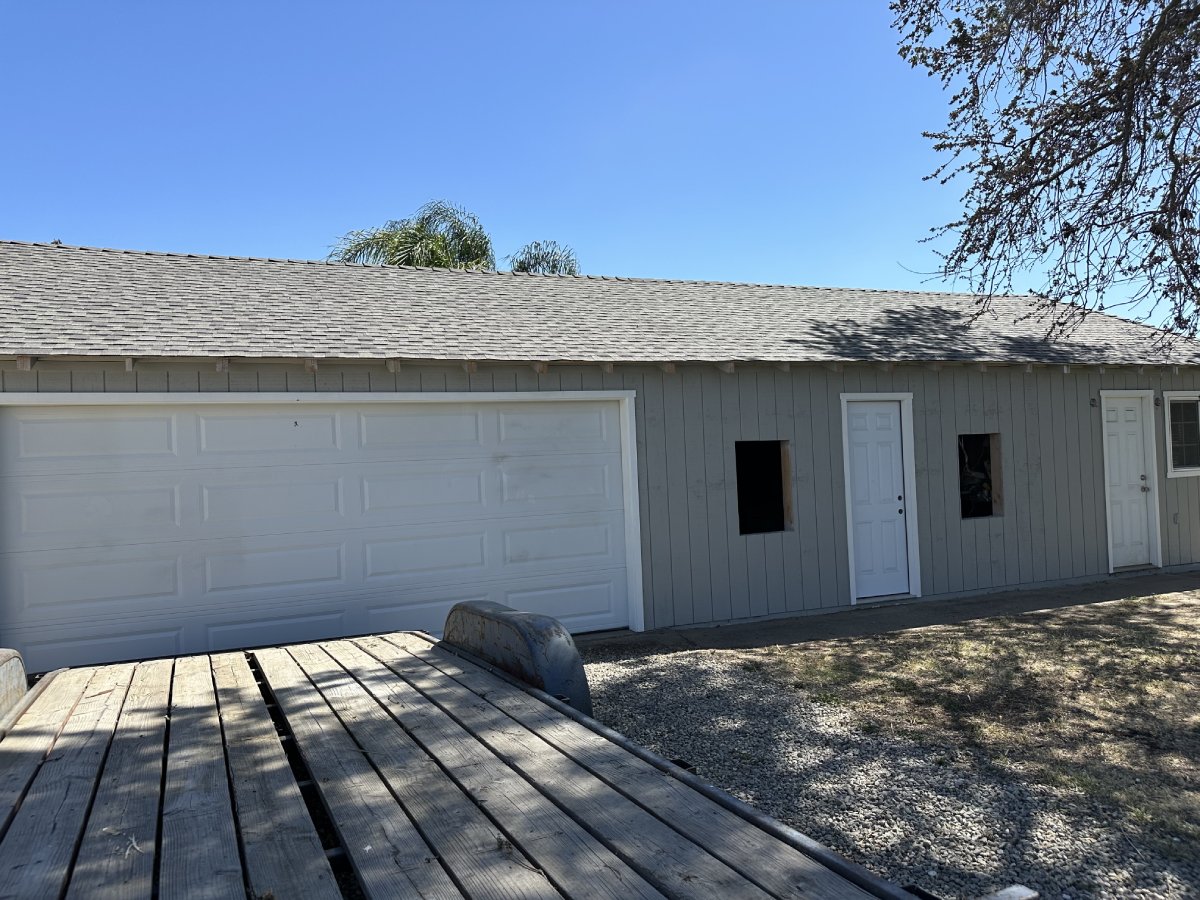
An infill lot is a single vacant or teardown parcel inside a neighborhood that was finished decades ago. The build itself is ordinary. Everything around it is not. Utilities are usually already in the street, which is the big advantage. What you trade for it is a tight site, possible demolition, neighbors on three sides, older setback lines, and mature trees you have to work around instead of through.
Most people picture a custom home going up on raw ground at the edge of town. Bare dirt, no fences, room for the excavator to swing. Manteca has plenty of that. It also has something better hidden in plain sight: single lots scattered through the older grid north of Yosemite Avenue and out through the established streets near Lincoln and Union, where a house burned down, or was never built, or is sitting there tired and ready to come out.
Those are infill lots. We build on them, and they are a different job than a subdivision build. The differences show up early enough that you want to know them before you buy the dirt.
Why the street matters more than the lot
The first thing we look at on an infill parcel is not the parcel. It is the street in front of it.
An established Manteca block already has a water main, a sewer main, gas, and power running past the property line. Your job is a connection, not an extension. A water tap, a sewer lateral, a gas service, a power drop. Short runs, usually inside the right of way, done in days.
Compare that to a fringe parcel out toward the ag edge. The land is cheaper per acre and everybody notices that number first. Then you find out the sewer main stops a quarter mile back, so you are either paying to extend it or engineering a septic system with its own soils testing and its own permit track. The water may be a well. Power may need poles set. Every one of those is a separate trade, a separate inspection, and a separate month.
That is the qualitative math that makes infill attractive. You are buying a smaller, more constrained piece of ground, and in exchange the utility side of your project is mostly already solved.
The catch is that “already in the street” is a claim to verify, not assume. We pull the utility records and we field-verify before anybody signs. Older blocks sometimes have a sewer main on the far side of the street, which means a bore or a cut across pavement and a city encroachment permit. Some laterals from the original build are clay or Orangeburg and need replacing to the main. Occasionally the gas service was capped and abandoned when the old house came down, and a new service has to be scheduled with the utility on their calendar, not yours. Find that out in due diligence and it is a line item. Find it out after close and it is a surprise.
When something is already standing on your dirt
A good share of Manteca infill comes with a house on it. You are buying the lot, and the structure is coming down.
Demolition is its own permit and its own sequence, and it starts before the machines do. Utilities get disconnected and capped at the source, each by its own utility, each on its own schedule. That coordination is usually the longest part of demo, not the knockdown.
Anything built before the late 1970s in this part of the Valley gets a hazardous materials survey first. Asbestos in floor tile, in duct wrap, in old siding board, and lead in the paint. If it is there, abatement is a licensed specialty trade with its own notification requirements and its own disposal paperwork. It has to be handled before general demolition.
Then there is what is under the slab, which nobody can see until the slab is gone:
- Old septic tanks and leach fields. Plenty of homes on the older edges of town were on septic before sewer came through. Abandoned tanks have to be pumped, crushed or removed, and backfilled properly.
- Buried fuel tanks. Heating oil tanks show up on older properties. Removal is regulated and soil sampling may follow.
- Old foundations and non-engineered fill. The previous foundation and any debris backfill has to come out. You cannot bear a new structure on somebody else’s rubble.
- Wells. An old domestic well has to be destroyed to county standards by a licensed driller, with a permit. Capping it with a piece of plate steel is not destruction.
It just belongs in the scope before you sign, which is why we walk the property and pull the history before we hand anyone a quote.
Building with neighbors twenty feet away
On a subdivision lot, your neighbor is a stake and a string. On an infill lot, your neighbor is a person who has lived there for eighteen years and parks in the spot your concrete truck needs.
It has almost nothing to do with carpentry.
- Staging. There is no back forty to pile lumber on. Materials get ordered to arrive close to when they get installed, which means tighter scheduling and more deliveries rather than one big drop.
- Deliveries and cranes. Trusses and long loads need a place to stage and a swing path. On a narrow street that can mean a temporary lane closure with a city permit, worked out in advance and posted so neighbors are not surprised.
- Dust. San Joaquin Valley air rules are real and enforced. Watering during demolition and grading, covering loads, sweeping tracked dirt off the street.
- Hours. Manteca has allowed construction hours, and on an infill block they get noticed. Nobody complains about a saw at ten in the morning. Everybody complains about one at six thirty.
- Parking. A framing crew is five or six trucks. If they take the whole block every morning for a month, you have a problem that outlasts the build. We stage crew parking deliberately.
We knock on doors before we start. Adam does this himself on infill jobs. Introduce the crew lead, hand over a phone number, tell people roughly what is happening and when the loud parts are. It prevents most of the complaint calls that stall a job, and you are the one who still lives there when we are gone.
Older setbacks, smaller lot, real design constraints
Infill lots in the older parts of Manteca were platted under a different set of rules than the subdivisions built in the last twenty years. They are frequently narrower and shallower than what a modern builder would draw.
That reshapes the house before you ever pick a finish. Current zoning setbacks apply to your new construction, and on a narrow lot the front, rear, and side setbacks can leave a buildable footprint considerably smaller than the parcel suggests. Lot coverage limits and height limits stack on top of that. So does the garage question, since a narrow lot may not accept a three-car front-facing garage without eating the entire street elevation.
The answer is usually to go up rather than out, and to get smart about where the mass sits. Two stories with the garage set back or turned. Living space over the garage. Outdoor space concentrated in one usable side yard rather than sprinkled around the perimeter. These are good design moves anyway.
City review versus county review
If your lot is inside Manteca city limits, you are working with the City of Manteca on zoning and building. If it sits in an unincorporated pocket of San Joaquin County, you are working with the county instead, on a different set of standards and a different counter.
The practical difference is where the questions come from. City review inside an established neighborhood pays attention to how the new house meets the street: setback consistency, height relative to what is next door, driveway and encroachment approvals. County review on a rural-adjacent parcel is more focused on the site and the systems, including septic and well when they apply. They are different tracks, and you want the answer before you draw plans, not after. We confirm jurisdiction on day one.
Trees you have to build around
Established Manteca neighborhoods have trees that predate most of the houses. Valley oaks, big old elms, sycamores in the parkway. Some are protected, and the parkway trees between the sidewalk and the curb generally belong to the city.
Get an arborist involved during design, not during grading. What you need is a survey of what is on and near the lot, the critical root zone of anything you are keeping, and a written protection plan: fencing at the drip line before any equipment arrives, no material storage or vehicle traffic inside the fence, hand digging or boring where a utility line must pass through the zone, and pruning done by the arborist rather than by whoever has a saw.
Trees are also worth keeping on the merits. A mature shade tree on the west side of a house in this climate earns its keep every August, and a new home under an established canopy looks settled the day you move in. Losing one is permanent. You can replant, but you are handing the shade to the next owner, not to yourself.
Frequently asked Manteca infill build questions
Is an infill lot really cheaper to build on than a lot at the edge of town?
The land is usually more per square foot, and the site work is usually less. Utilities are already at the street, the roads are in, and drainage connects to a system that exists. On a fringe parcel you pay for the mains, the septic or the well, and the long service runs. We price the lot and the build together before you commit.
Can you demolish the existing house and build new under one contract?
Yes. Demolition, hazardous materials abatement, utility disconnects, and site prep all sit inside our scope, and we sequence them ahead of the build so there is no gap between the teardown and the foundation.
How do you keep the neighbors from getting angry?
Talk to them first, keep the street clean, and hold construction hours honestly. We introduce the crew lead to the adjacent neighbors before demolition, give out a direct number, and post the schedule for loud phases. Most complaints come from surprise rather than noise.
Will the city make me match the neighborhood?
Zoning controls setbacks, height, and lot coverage, and inside city limits the review process pays attention to how a new home meets an established street. Whether you match the architecture is largely your call within those limits. We confirm exactly which standards apply to your parcel before design starts.
What happens if we find something buried during excavation?
We stop, document it, and tell you the same day. Old septic tanks, abandoned wells, buried fuel tanks, and non-engineered fill each have a defined handling and permit path. Our contracts carry a documented allowance for it on teardown lots so a discovery becomes a scheduled task instead of a renegotiation.
Start Your Build in Manteca
Walk the lot with us before you buy it. We check utilities, setbacks, trees, and what is under the old slab, then give you a free quote on the whole picture.
Serving Manteca, Lodi, Stockton, and all of San Joaquin County. See our new construction builds page, our Manteca service area, browse the recent project gallery, or tell us about your lot.