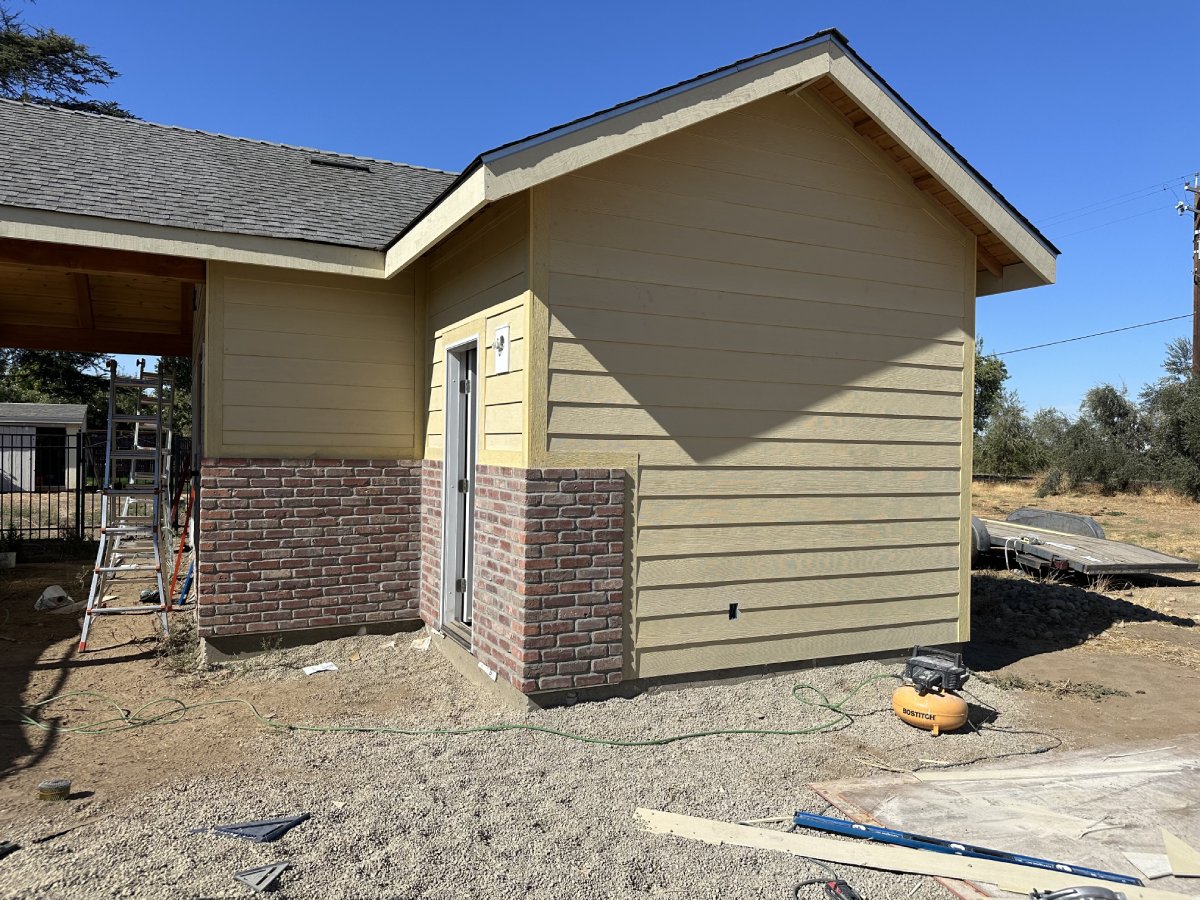
Galt Siding Installation
We strip the rotted courses, wrap and flash the wall the way it should have been done the first time, then hang siding that holds its paint through a Galt August.
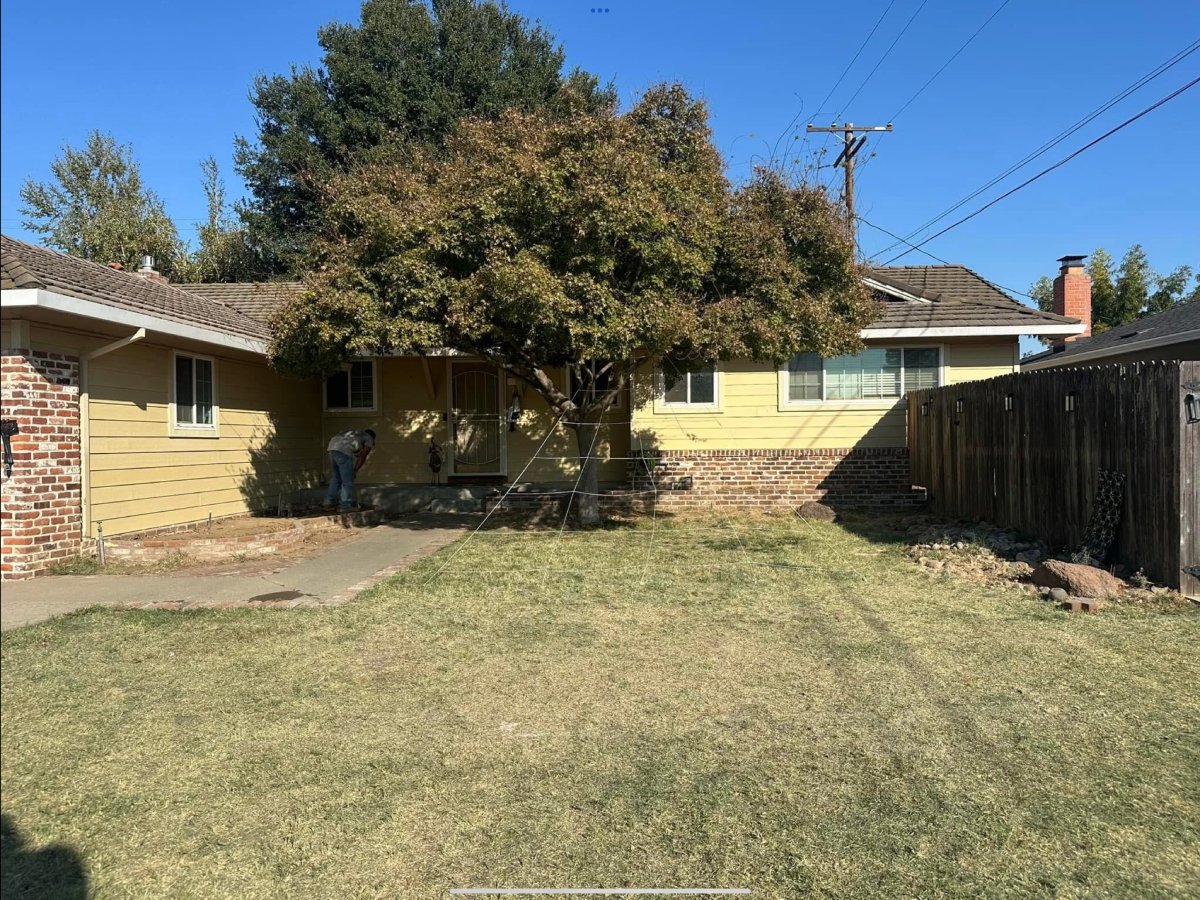
Ranch Siding Rots From the Bottom Up
Drive through the older parts of Galt and you will pass plenty of single-story ranch homes from the 1960s and 1970s still wearing their original lap siding. Up high, a lot of it is in better shape than you would guess. The trouble is almost always down low, in the first two or three courses.
Those boards sit closest to the ground. For decades they have taken spray from lawn sprinklers set a little too wide, splash from winter storms coming off the eaves, and the soil or bark that crept up against the wall. Paint fails there first, the end grain drinks water, and the board goes soft from the back while it still looks fine from the street.
Push a screwdriver into the lowest course near a sprinkler head. If it sinks in, the rot has probably reached the sheathing or the bottom plate behind it, and that is worth knowing before anyone hands you a number.
We take off enough siding to find where the damage stops, repair the framing and sheathing that need it, and only then talk about what goes back on.
The Layer Behind the Boards Keeps the Wall Dry
Siding sheds most of the water that hits a wall. Some always gets past it, through the laps, around nail heads and at the ends of boards. A wall stays dry only when there is a continuous weather barrier underneath and a way for that water to drain back out at the bottom.
Older homes often have felt paper that has gone brittle, or gaps where it was never lapped properly. On a full replacement we put up new house wrap, lapped shingle-style so every upper piece overlaps the one below it, with the seams taped.
Windows and doors get the most care. Flashing tape goes on in a set order, sill first, then the sides, then the head, so water running down the wall always lands on top of the flashing. A head flashing over each opening carries water out past the trim. Getting that order wrong is the most common reason a brand new siding job still leaks at a window corner.
Some water always gets behind siding. The wall stays sound when that water has a clear path back out at the bottom.
Outside corners, trim boards and the spot where a lower roof meets the wall get their own flashing too. Those are the places where water collects and runs sideways, and on an old job they are usually where the sheathing turned dark first. Hose bibs, dryer vents and light boxes each get a mounting block flashed into the wrap, so nothing is simply caulked to the face of a board.
At the base of the wall we hold the new boards up off the soil and the concrete by the clearance the manufacturer calls for, so they do not start wicking water on the first morning the sprinklers run.
Which Siding Suits the House You Have
Most of the decisions come down to the age of the house and how much of it is being re-sided.
Fiber cement
Fiber cement does not rot, does not interest termites and holds paint well, which makes it our usual recommendation for a full re-side in this heat. It is heavy, it gets cut with dust control, and butt joints need correct gapping with flashing behind them. Nailed carelessly, it cracks at the fasteners.
Wood
Wood still makes sense on some houses, especially a partial repair on a ranch home where the rest of the wall is wood and the new boards need to read the same. It wants primer on all six sides before it goes up, good paint after, and lower courses kept out of sprinkler range.
Where siding meets brick
Plenty of ranch homes carry a brick wainscot along the front with siding above it. The joint where the siding stops on top of the brick needs a flashing that kicks water out past the face of the brick. Without one, water runs down behind the brick and stays there.
Matching a partial job
When only one wall or the lower courses are coming off, the new boards need the same exposure, thickness and profile as the old ones, or the line jumps where they meet. We take a piece of the existing siding to match and plan the seam at a corner, a window or a trim board where the eye accepts a break.
Siding the Buildings Out Back
With farm ground and bigger rural lots around town, a good share of siding work is on structures other than the house.
Detached Garages
Siding that matches the house, with the trim at the door opening framed so a new garage door can go in later without tearing anything apart.
Shops on Rural Lots
Board or lap siding on a shop or barn, wrapped and flashed the same way we would do a house, because rain does not care what the building is for.
ADU Shells
A backyard unit gets the same wrap, flashing and ground clearance as the main house, plus siding chosen to tie the two together.
Paint for the Heat
Lighter colors and a good exterior acrylic hold up to 100-degree afternoons. Dark colors on a west wall fade fastest and move the most.
Caulk Where It Belongs
We caulk where trim meets siding and leave the laps open so the wall can drain. Sealing the laps shut traps water inside.
The Right Permit Office
Parcels inside city limits are permitted through the City of Galt. Rural parcels outside town go through the County of Sacramento.
What People Ask Before Re-Siding
How do I know if the rot goes past the siding?
Push a screwdriver into the lowest boards, especially near sprinkler heads and downspouts. If it sinks in, the damage has likely reached the sheathing or the bottom plate. The only way to know for certain is to open the wall, so we remove enough siding to see where solid wood starts before we quote the rest.
Can you replace only the bottom boards?
Often, yes. If the upper courses are sound, we cut out the damaged lower boards, repair what is behind them, and install new boards that match the existing exposure and profile. The new pieces get primed and painted to blend in. A wall with rot spread from top to bottom is usually better re-sided as a whole.
Is fiber cement better than wood for a house in Galt?
For a full re-side, usually. Fiber cement does not rot or attract termites, and it holds paint through long hot summers. Wood is still the better match for a partial repair where the rest of the house is wood. Either one lasts when it is flashed correctly and kept clear of sprinkler spray.
Do you install new house wrap on every job?
On a full re-side, yes. The old felt behind most older siding has gone brittle, and the wall depends on that layer to stay dry. On a partial repair we tie fresh wrap into the existing layer above it, lapped so water always runs over the seam and never gets behind it.
Can you side a backyard unit or detached garage to match the house?
Yes. We side detached garages, shops and backyard units, and match the profile and color of the main house when that is the goal. On a new structure built from the frame up, we handle the wrap, the window flashing and the siding as one job under our General B license.
Who issues the permit for siding work?
That depends on where the parcel sits. Homes inside Galt city limits are permitted through the City of Galt, and rural parcels outside the city go through the County of Sacramento. We confirm which office covers your address and pull the permit from that one whenever the scope of work calls for it.
Other Jobs on a Galt Exterior
New siding often goes up beside other work. A rotted bottom plate behind the boards is sometimes the same water that shows up as a soft garage jamb, which is where garage door replacement picks it up. Homes finished in stucco face the same water questions, and our stucco repair page walks through them. If the roof above is curling, replacing the roof first keeps the fresh paint clean, and a new deck needs its ledger flashed into the new wall before the boards close it in.
Our Galt page lists the full range of work in town. Coverage across the county lives on the Sacramento County page, materials and methods are on the siding installation service page, and finished exteriors are in the gallery.
Get the Bottom Boards Checked Before Anything Gets Painted.
Adam will walk the house with you, probe the low courses, and pull a board where it is needed to see what is behind it. The itemized quote lists the wrap, the flashing, the siding product and the paint, so you can compare it line by line against anyone else’s. Use the contact page or call, and tell us whether it is the house, a garage or a shop.